
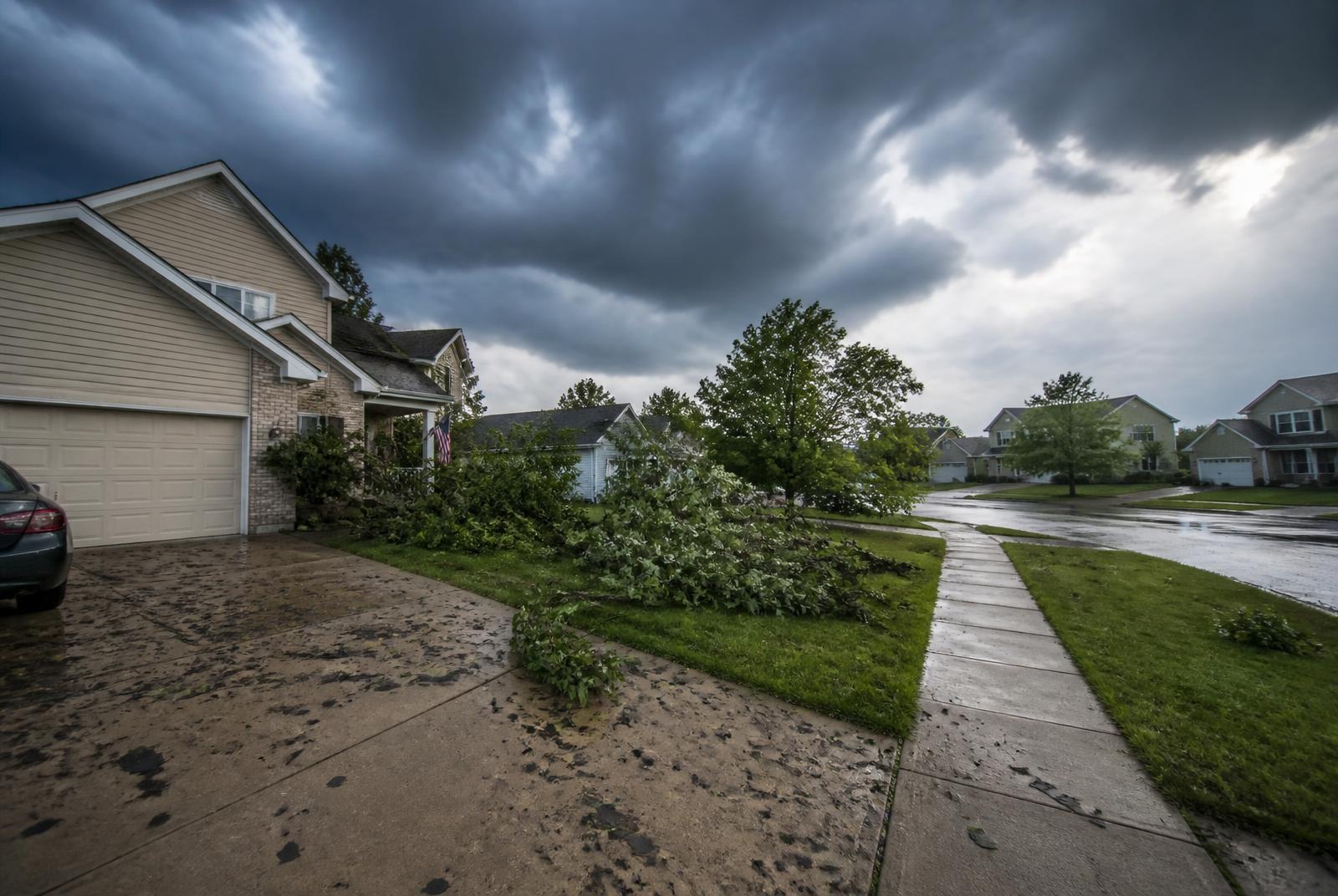
What to document, what to look for from the ground, and how to avoid the contractors who follow bad weather.
Document before you touch anything
Photograph the property from all four sides, plus any debris, dented gutters, and the interior of the attic. Timestamped photos taken immediately after the event are the single most useful thing you can produce later.
What is visible from the ground
You can learn a lot without a ladder.
- Shingles in the yard, in gutters or against the fence line.
- Bare patches or lifted tabs along ridges and rake edges, where wind pressure is highest.
- Dents in gutters, downspouts, vents or the air conditioning fins — a reliable proxy for hail size.
- Displaced ridge caps, bent drip edge, or flashing pulled away from a chimney.
- Tree limbs resting on the roof, which should be removed by someone who can do it without loading the deck.
Be careful who knocks
Severe weather brings crews that travel from state to state. Before signing anything, confirm the company is licensed and insured in your state, ask for a local point of contact, and never hand over a signed contingency agreement that assigns your claim benefits to a contractor you met at the door.
A written estimate with a defined scope should cost you nothing, and no reputable roofer needs a deposit before an inspection.
Timelines matter
Most policies require prompt notice of loss. Report the event to your insurer even if you are still deciding what to do, and keep receipts for any emergency measures — those are usually reimbursable.